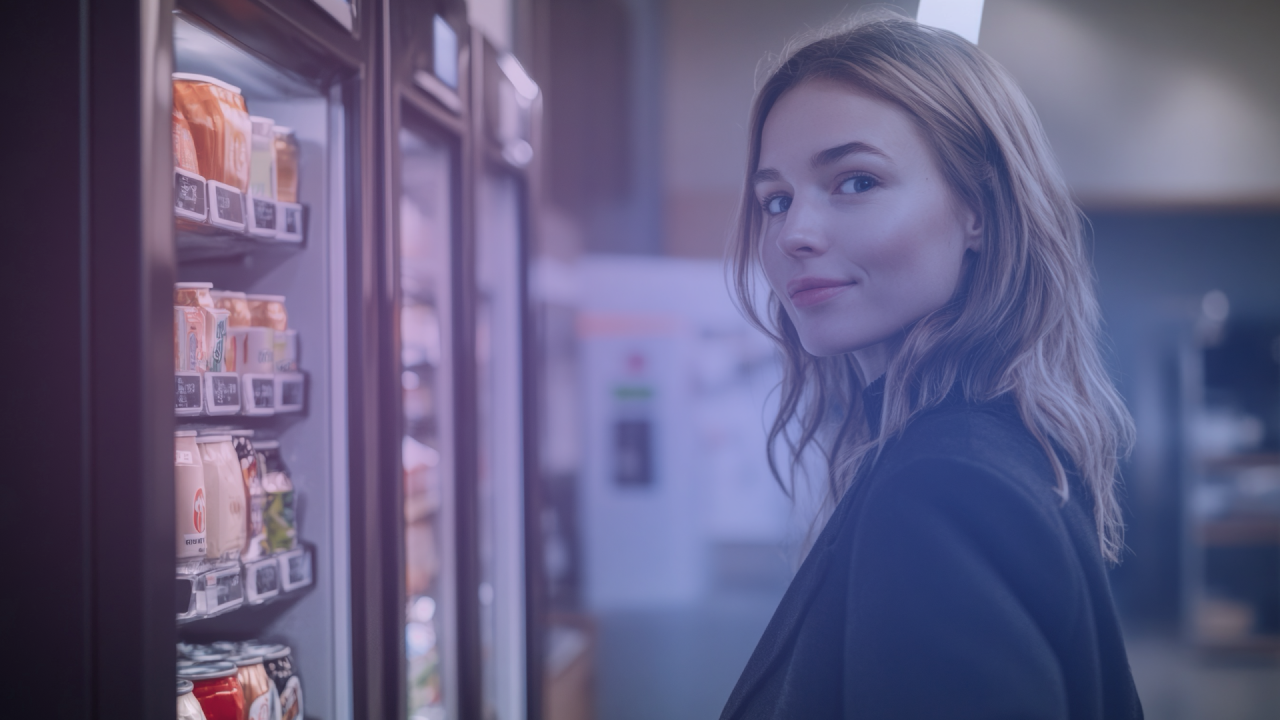

Vending machines have become an essential part of everyday life. Their presence in public and semi-public spaces is so familiar that they often go unnoticed. From early-morning coffees in the office to late-night snacks at the train station, millions of people rely on around-the-clock vending services for small moments of comfort and convenience. With this level of usage, and as payment trends evolve rapidly, expectations around vending payment processing for both users and operators are changing.
For customers, this means being able to use familiar payment options, via contactless cards and mobile devices, while benefiting from relevant pricing or entitlements. For vending machine operators, it means modernising services to meet today’s capabilities and support future growth.
Entering 2026, several clear vending trends are shaping how operators think about payments, access, and customer experience. Together, they point to one conclusion: payment is no longer just about collecting money. It is becoming the foundation for how vending services are used, managed, and improved in an industry that continues to grow. If you are considering upgrading your vending payment systems, the following trends outline what to look for, and why it matters.
Semi-public environments face a unique payment dilemma; they must serve different types of customers in the same space. Regular users, such as students, staff, or members, use vending machines frequently and expect a familiar experience. At the same time, occasional visitors need quick, reliable ways to pay using methods they already trust.
Historically, this has created a hardware and acceptance challenge. Closed-loop systems, such as staff cards or badges, support recognition but require separate infrastructure. Open-loop payments, based on bank cards and digital wallets, are widely accessible but are typically deployed as standalone payment terminals.
Increasingly, this separation no longer reflects how vending environments operate. The trend is toward payment terminals that can support both open- and closed-loop payments on a single device, allowing operators to serve all users without deploying parallel systems.
By consolidating payment acceptance into one terminal, operators reduce hardware complexity while maintaining flexibility across user groups.
Planning considerations: Review whether your payment terminals can support both open- and closed-loop payments, also known as hybrid-loop payments, on a single device. Consolidated acceptance reduces installation and maintenance complexity while ensuring accessibility for all users.
As vending portfolios grow, operational complexity tends to grow with them. Multiple payment providers, separate contracts, and fragmented settlement flows create unnecessary administrative overhead, particularly for vending operators managing large numbers of machines across multiple locations.
In response, the vending trend is moving toward consolidated payment models, where a single payment solution supports the full payment flow. This simplifies operations, provides a clearer end-to-end view of transactions and settlement, and makes payment costs more predictable and easier to manage.
For vending operators, this level of commercial simplicity is becoming as important as technical capability, enabling vending businesses to scale more efficiently while reducing administrative effort across machines and locations.
Planning considerations: Review how many payment providers, contracts, and settlement processes your current setup involves. Solutions built around a single commercial relationship reduce administrative effort and make costs easier to manage.
Once different users can be served through the same terminal, expectations shift from access to experience. Customers increasingly expect vending services to apply relevant pricing, privileges, or loyalty benefits automatically. Staff pricing, student discounts, and repeat-use rewards are no longer seen as optional extras.
At the same time, friction remains a risk in unattended environments. Requiring apps, registrations, or additional steps at checkout can slow transactions and discourage use, particularly for visitors.
The vending trend is toward personalisation that happens at the payment level. Returning users can be recognised and served appropriately, while visitors can continue to pay anonymously using familiar payment methods. Personalisation becomes part of the payment flow rather than a separate process.
Planning considerations: Review whether your payment setup can apply pricing rules, privileges, and loyalty automatically at the point of payment. Personalisation should be seamless and inclusive, without requiring users to take additional steps.
With 2026 vending trends in mind, upgrading payment terminals is no longer just a technical refresh. Modern payment platforms play a central role in how vending operations scale, adapt, and grow. But growth only works when deployment is simple.
Operators increasingly need payment terminals that are easy to install, quick to configure, and straightforward to roll out across large estates. Long installation cycles, bespoke integrations, or extended downtime slow expansion and increase cost.
Modern payment platforms are designed to integrate with existing vending machines and operator systems, allowing upgrades to happen incrementally. This reduces time on site, limits disruption, and makes expansion more predictable.
In this context, payment terminals are becoming long-term infrastructure or platforms that support growth without adding operational friction.
Planning considerations: Look for innovative payment solutions that are easy to install, integrate smoothly with existing systems, and are built to evolve over time. A payment platform should support future capabilities without requiring frequent hardware changes.
In 2026, successful vending machine operations will not be defined by how many payment methods are accepted, but by how intelligently payments are used across devices, users, and locations. The convergence of payment models, the consolidation of commercial relationships, and the move toward seamless personalisation all point in the same direction: payments are becoming core infrastructure, not an afterthought.
For vending operators, upgrading payment terminals is no longer just about keeping up. It is an opportunity to simplify operations, serve different users more effectively, and build vending services that can scale without adding complexity.
Modern payment solutions for vending, such as XPP’s KUARIO payment and vending platform and its HybridPay capabilities, are designed with this shift in mind, combining open accessibility, personalised payment logic, and operational simplicity within a single payment infrastructure.
When payment systems are designed to be open, flexible, and easy to operate, vending becomes easier to use, easier to manage, and better positioned for long-term growth.